
Before investing more into acquiring new members for a loyalty programme, it’s good to remember: acquiring new customers can cost up to five times as much as retaining existing ones.
As retailers face continued pressure on margins and marketing budgets, getting more value from existing customer relationships makes increasing financial sense.
There’s a whole pool of members worth looking at before searching for new ones. Some of the most overlooked potential sits with people who have already signed up but aren’t actively participating. Only 61% of registered UK loyalty members made a purchase in the previous 12 months, on average.
These figures point to a growth strategy worth sharper focus than acquisition: reactivating dormant loyalty members.
Why loyalty members go dormant
Dormant members are not lost. Some still shop but no longer use loyalty benefits, while others have reduced their spending or stopped engaging with the programme. Many still have a relationship with the retailer. Some are easier to wake up from dormancy than others, especially when the reason they stopped participating is something the programme can actually address.
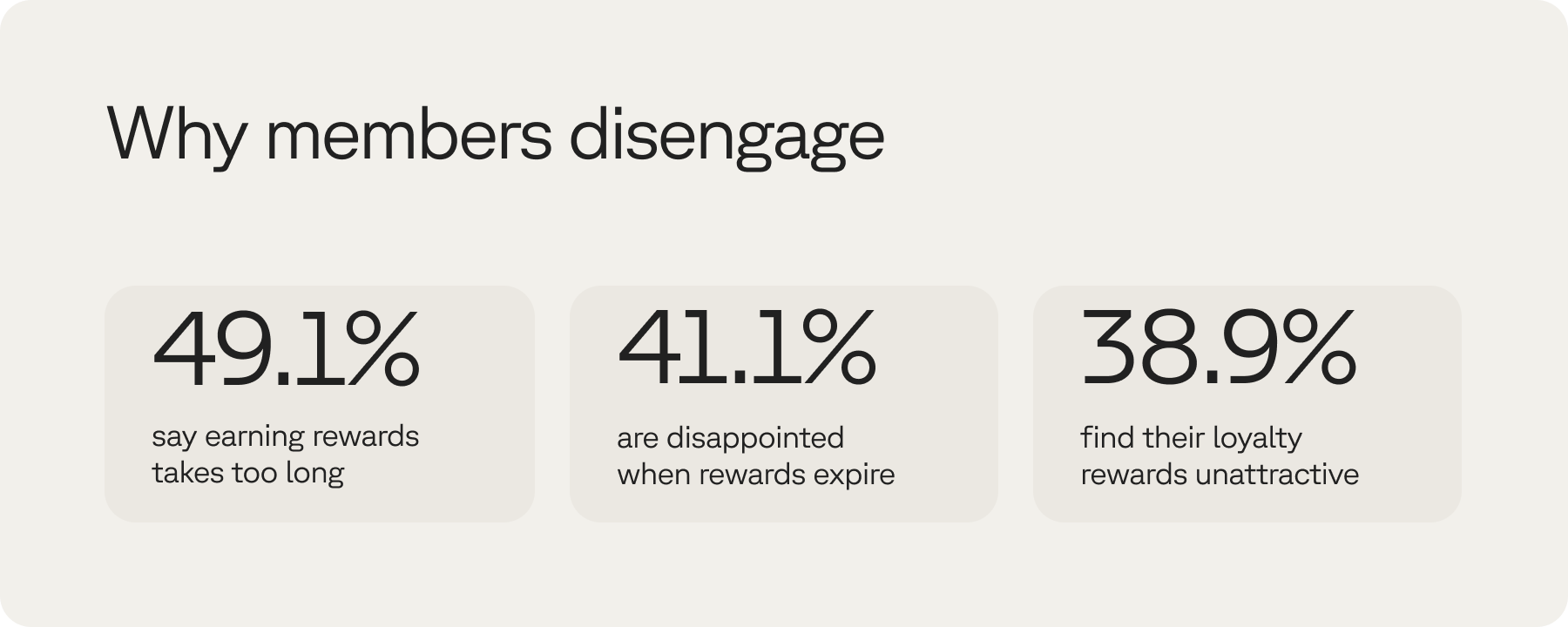
There’s insight into this in a 2026 customer loyalty report: 49.1% of surveyed consumers say that earning rewards takes too long, while 41.1% are disappointed when rewards expire before they can use them. Another 38.9% find the rewards themselves unattractive.
These findings highlight three factors contributing to disengagement:
- Slow reward accumulation disproportionately affects members who shop smaller or more infrequently, taking longer to earn meaningful rewards. Without one clearly on the horizon, they don’t have motivation to keep participating.
- Earning dependent on purchase frequency limits opportunities to interact with the loyalty programme between shopping trips. Since purchase frequency varies by retail category, less frequent shoppers may gradually disengage.
- Generic offers, repetitive promotions and rewards that don't reflect members' preferences can make the programme less useful, even when customers continue shopping with the retailer.
To make matters worse, these factors can reinforce one another. Members with fewer opportunities to earn rewards see slower progress, while irrelevant offers give them even less reason to engage. As participation declines, retailers also receive less behavioural data to personalise future offers and communications.
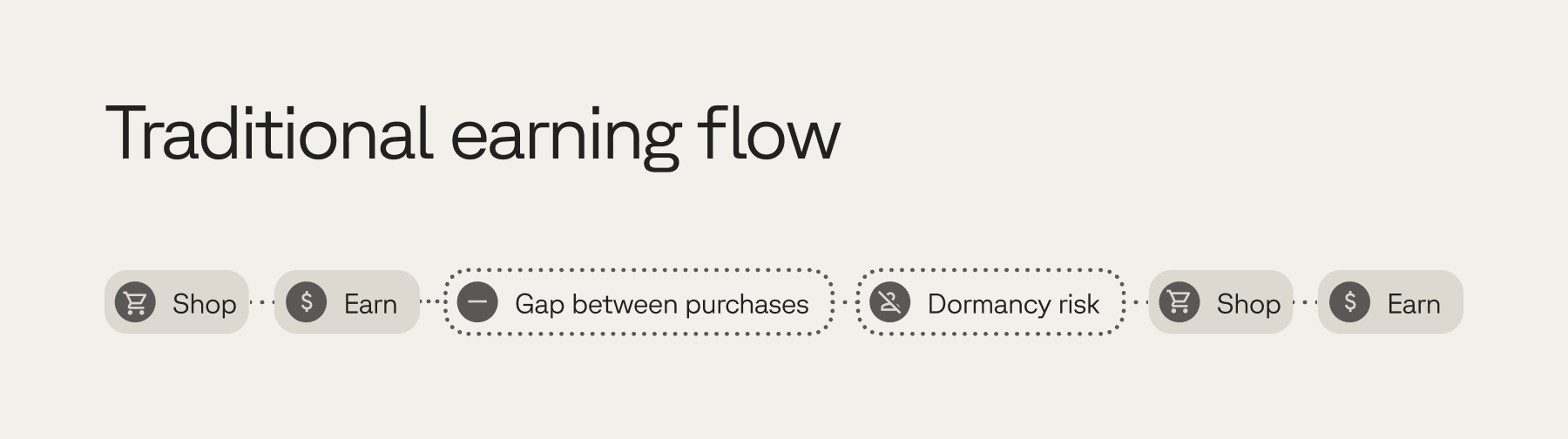
And that’s a cycle of diminishing engagement among shoppers who could still be reactivated. These members haven’t necessarily lost interest in the retailer, but they need a better reason to participate in its loyalty programme.
And bringing them back takes more than another reminder or discount. Retailers need to give members relevant reasons to participate and make progress towards rewards, even when they’re not making a purchase.
Reactivation: Why more discounts aren’t always the answer
Discounts and bonus points are familiar patterns to fall back into when trying to bring inactive members back. Yes, they can encourage another purchase, but they also come at a price. For retailers already operating on tight margins, regularly offering more generous incentives isn’t always sustainable.
And if a customer would have returned anyway, the retailer may end up paying for behaviour that would have happened regardless, rather than generating additional engagement or revenue.
If slow reward accumulation is part of what drives members away, making rewards easier to earn seems like an obvious fix. At least, it can be. Accelerating points accumulation can improve the member experience and give inactive members a reason to return. But when those extra points come out of promotional budgets, reactivation can quickly become as expensive as discounts.
Another way to bring these members back is to give them opportunities to earn rewards without requiring another purchase. Externally funded rewards create an additional source of reward funding, helping programmes accelerate earning and re-engage members without drawing on their existing promotional budgets.
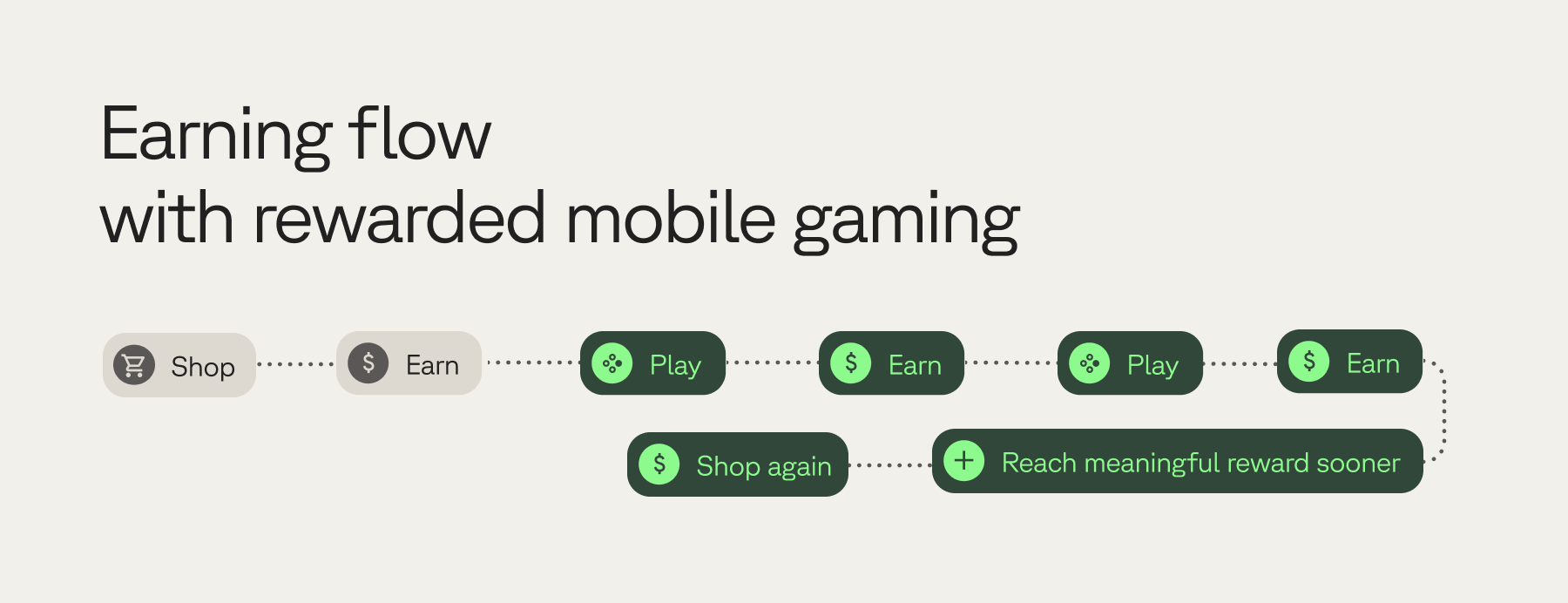
When rewards are externally funded, members can accumulate loyalty currency to spend with the retailer through daily activities. The key is to choose activities that match members’ interests, giving even those who aren’t ready to shop a reason to reconnect with the programme.
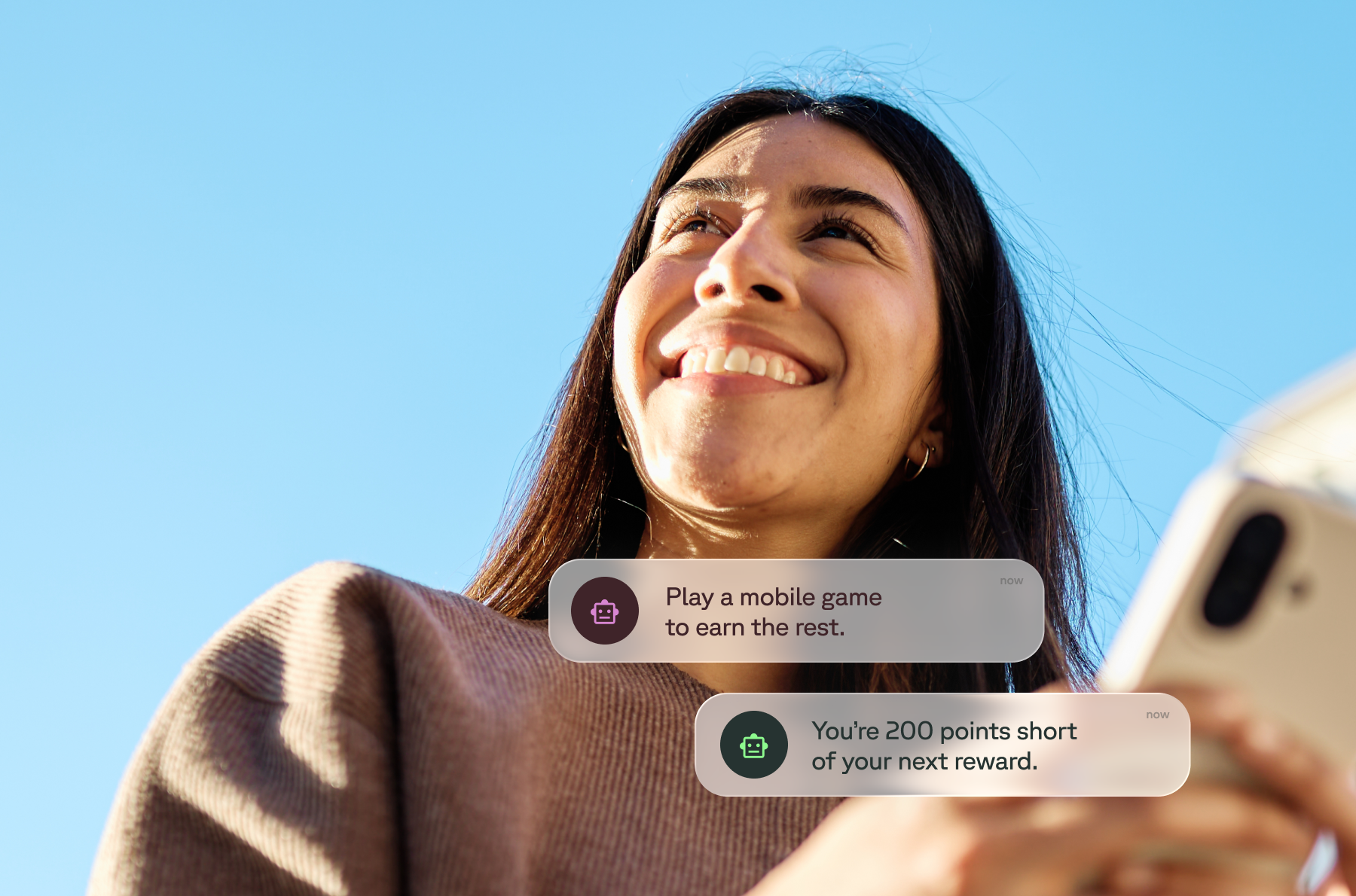
Mobile gaming is a particularly good fit for this model. It’s already a familiar activity for a wide audience, accessible on the same devices that host loyalty apps and available whenever members have a few minutes to spare. By rewarding gameplay with loyalty points, retailers can give members something they already enjoy doing – and another reason to engage with the programme, even when they’re not planning to shop.
How Nectar brought dormant members back through mobile gaming
For Nectar, the UK’s largest coalition loyalty programme with over 24 million members, earning points was closely linked to shopping frequency. Members had fewer opportunities to build their balances and engage with the programme – until Nectar started introducing non-transactional ways to earn rewards along with Nectar Arcade, a rewarded mobile gaming experience inside its loyalty app.
In Nectar Arcade, members can earn points for something most already do – discovering and playing mobile games. As an activity available at any time, it’s helping members grow their balances towards the next shopping trip whenever they feel like playing.
These additional rewards help sustain engagement, keep the brand top of mind, and they don’t put extra pressure on Nectar’s promotional budget; they’re funded by mobile games’ UA budgets. That’s $25 billion globally.
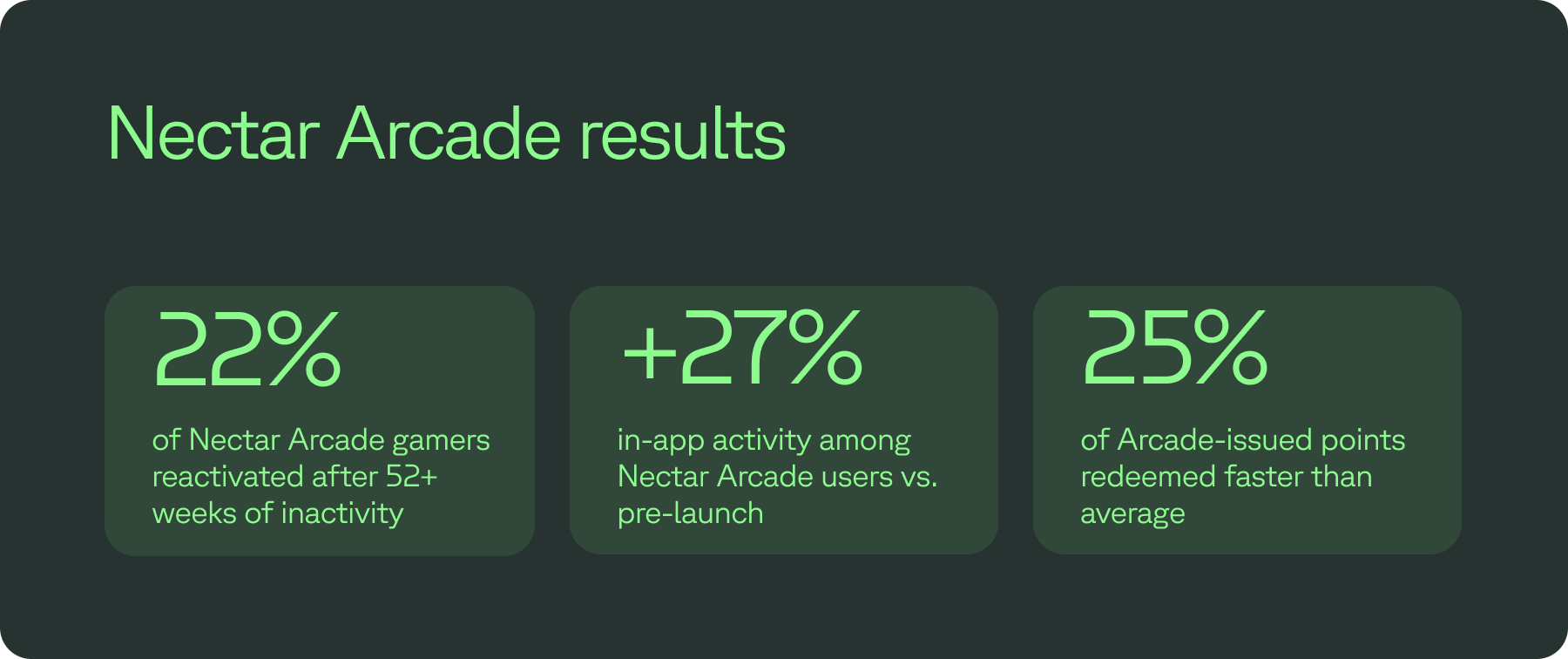
It reactivated members who had been dormant for quite some time. 22% of Nectar Arcade gamers were reactivated into the Nectar coalition after a lapse of at least 52 weeks. That’s a year of inactivity, and yet a new way to earn points gave them a reason to reconnect without having to shop first.
- Reactivation wasn't the only result. The new earning experience also encouraged ongoing engagement and faster reward redemption: In-app activity among Arcade users grew by 27% compared with pre-launch levels, more than twice the growth recorded across the wider Nectar membership.
- Millions of net-new Nectar points were issued through Arcade, with 25% redeemed within 19 days, faster than the average Nectar member.
Mobile gaming became a natural fit for Nectar’s loyalty programme. With games appealing to a wide range of interests, members could discover something they enjoy from personalized lists, earn points through play and spend them on rewards they already value – from groceries at Sainsbury’s to Uber rides or takeaway orders. No new reward currency or redemption system was needed, with adjoe’s technology powering the gaming experience inside the existing Nectar app.
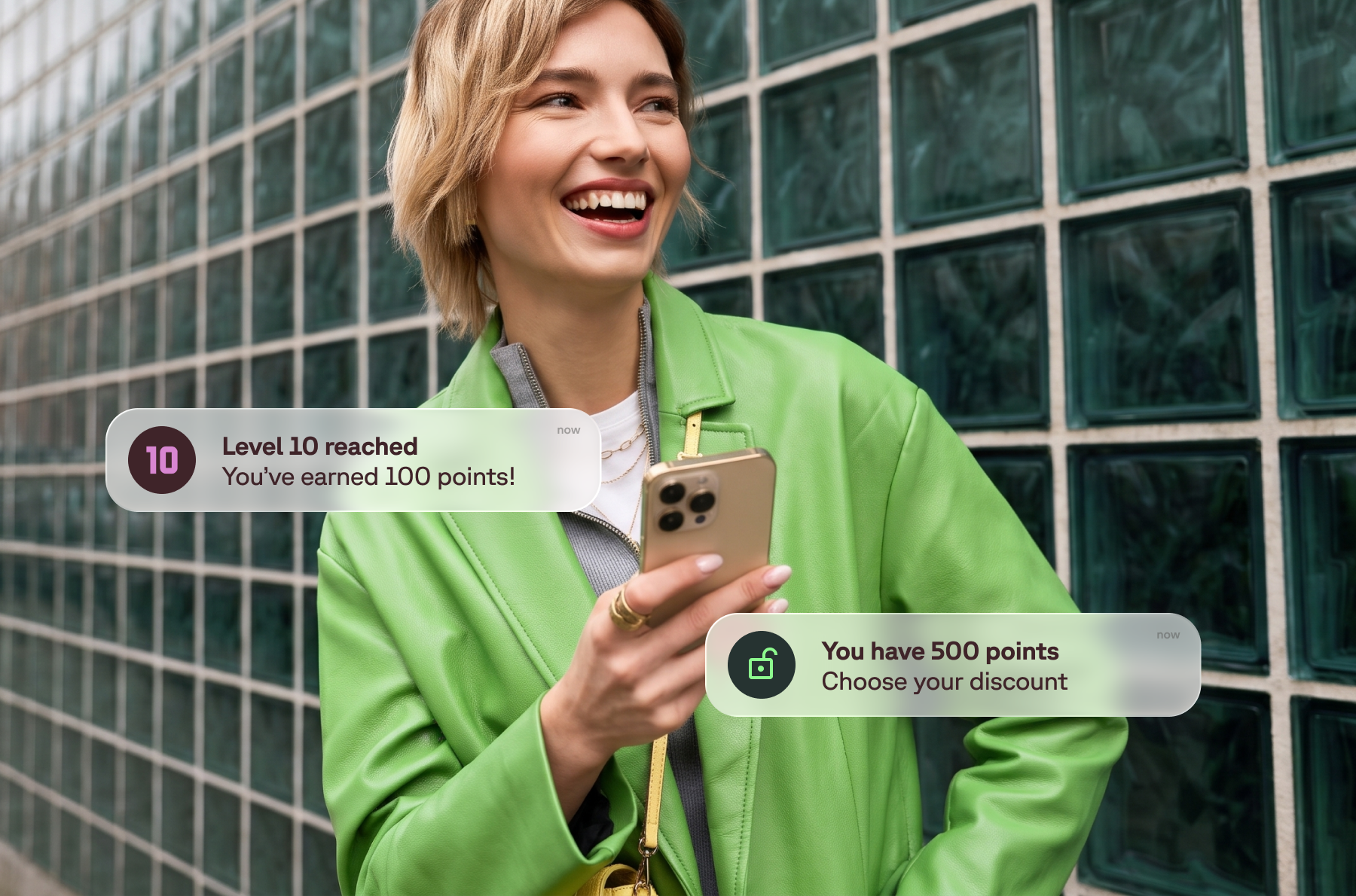
Nectar then also uses mobile gaming to drive deeper engagement goals. In a 2026 promotion, members can unlock an Uber voucher by trying a new game from Nectar Arcade. This gives Nectar another way to encourage feature adoption and repeat participation, rather than relying solely on shopping-related offers to bring members into the app.
Give dormant members more reasons to return
After all, loyalty programmes have already done the hard work of bringing these members on board. Before spending more to attract new ones, it’s worth seeing how many existing relationships can be brought back to life.
And with mobile gaming already part of millions of consumers’ daily routines, bringing it into loyalty apps makes a lot of sense. It gives members a familiar, enjoyable way to earn rewards, and retailers a way to stay relevant beyond the next shopping trip. With engagement technology now advanced enough to make it seamless, rewarded mobile gaming could well become a standard feature of loyalty programmes looking to keep members active.
And that’s what successful reactivation should lead to: more active members, more rewards redeemed and, ultimately, more customers returning to shop.
How many of your dormant members could be brought back? Talk to adjoe about assessing your reactivation potential through advertiser-funded rewards.