

TL;DR: AI agents can make loyalty easier to use, but harder to engage with directly. Retailers should automate the friction while preserving member-led earning and experiences inside the loyalty ecosystem.
AI agents are beginning to take over parts of shopping that once happened on retailers’ websites and apps. They compare products, identify offers and narrow the consideration set before the shopper reaches the retailer’s own channels.
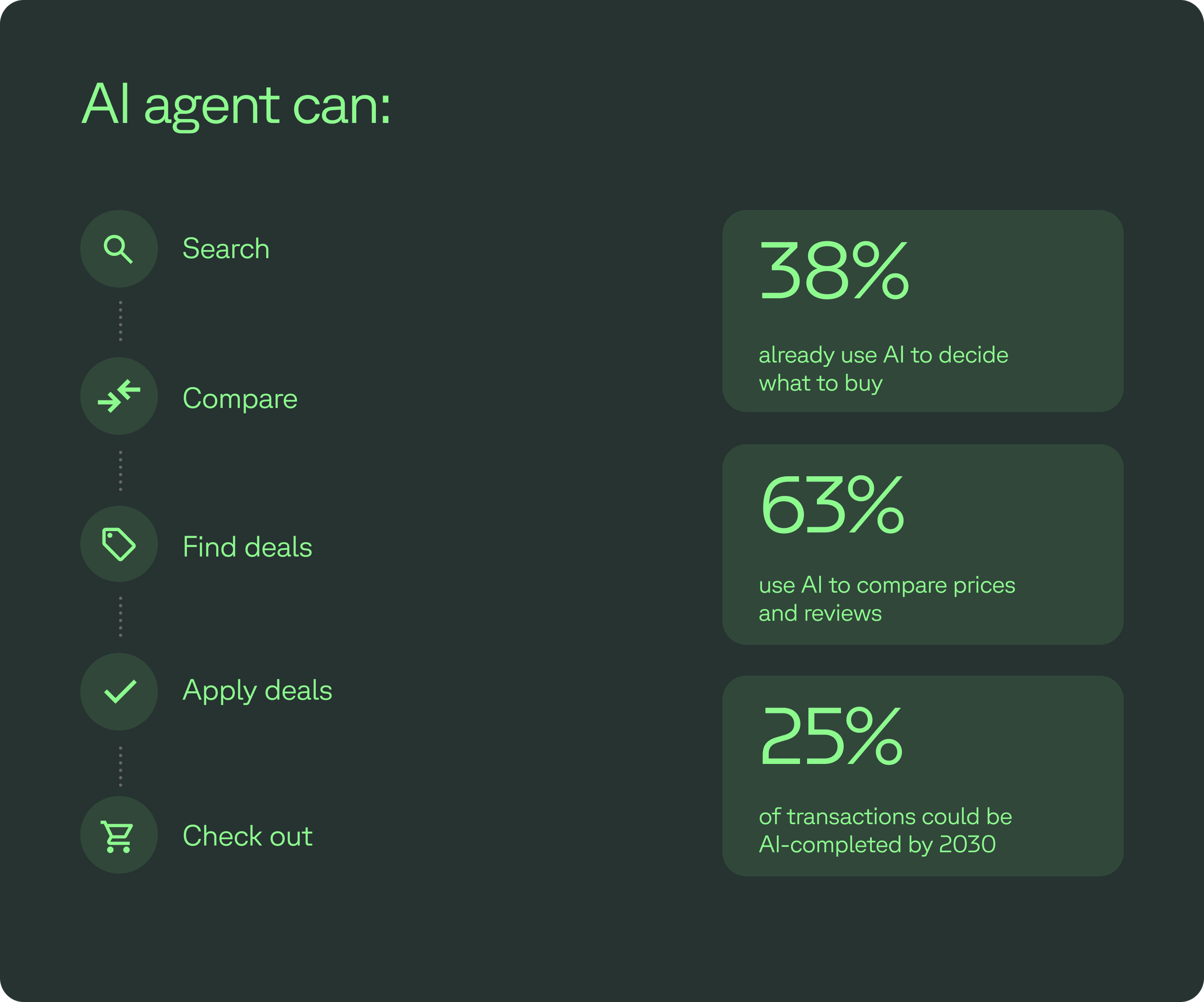
// McKinsey found that 38% of surveyed consumers in France, Germany and the UK already use AI to research products, compare offers, and decide what to buy.
The scenario where a “robot” looks for a discount and applies it to a shopper’s order all on its own is still a rarity, but not for long. Bain estimates that AI agents could complete 25% of US e-commerce transactions by 2030.
Retailers, beware: someone else’s interface will shape the choice, recommend the offer and complete the purchase.
Loyalty has to remain interactive
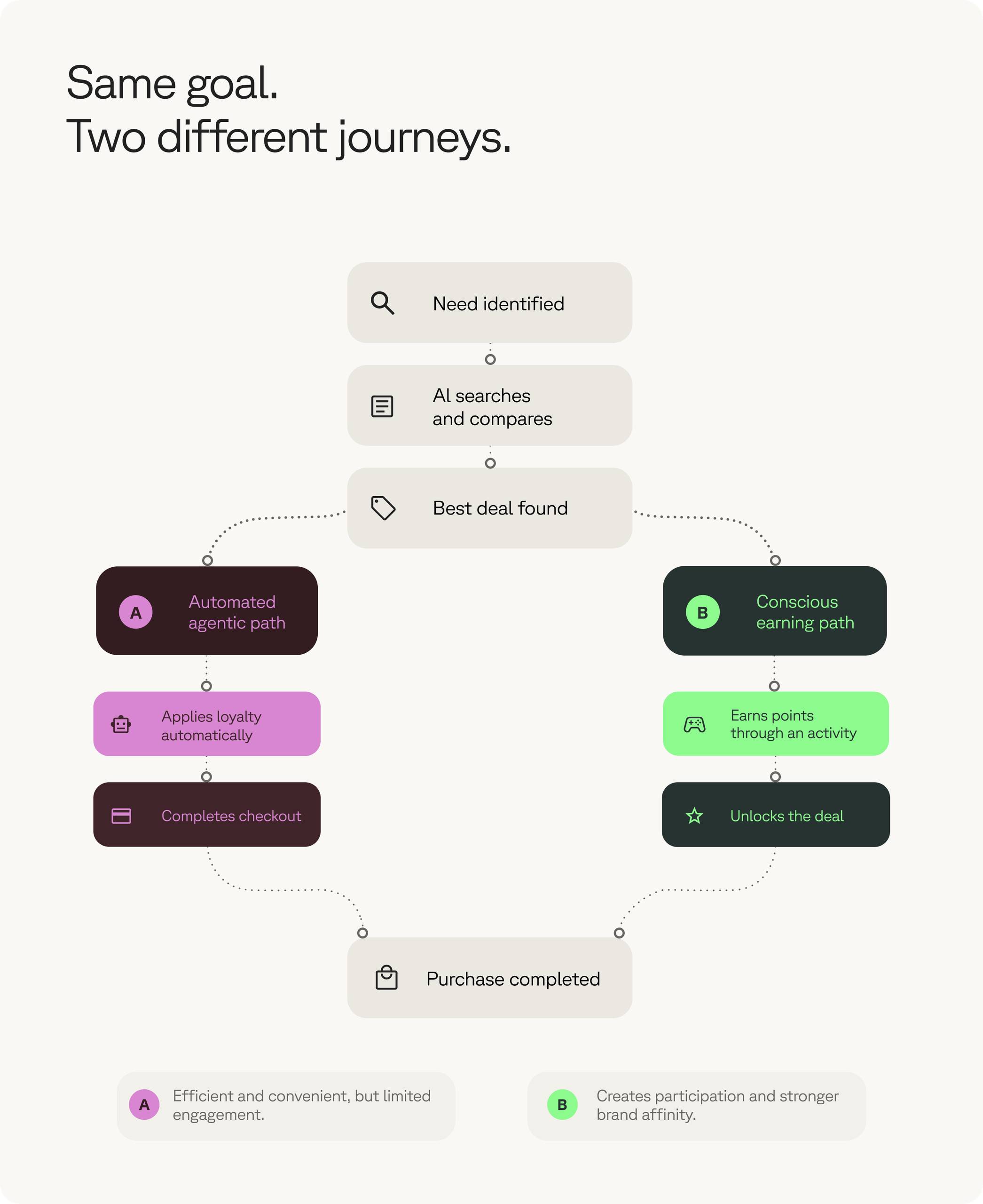
Even if the purchase is mediated by an AI-agent from start to finish, there’s still a way to pivot the recommendation towards the retailer’s programme and maintain loyalty through activities that can’t be automated.
If you want your offer considered, make sure the app is optimized for agentic discovery. When done correctly, this will make your loyalty benefits easier to discover and use.
Google’s Universal Commerce Protocol is creating a common language through which agents, retailers and payment providers can exchange product, checkout, and discount information. The protocol also covers loyalty, including account linking for loyalty programmes.
But there’s a catch.
Is that automation useful? Absolutely. Does it create loyalty? Absolutely not. If an agent can find the offer and apply the points, the member has fewer reasons to manage loyalty inside the retailer’s app. The programme still influences the transaction, but the interaction belongs to the agent.
What should stay inside the loyalty app?
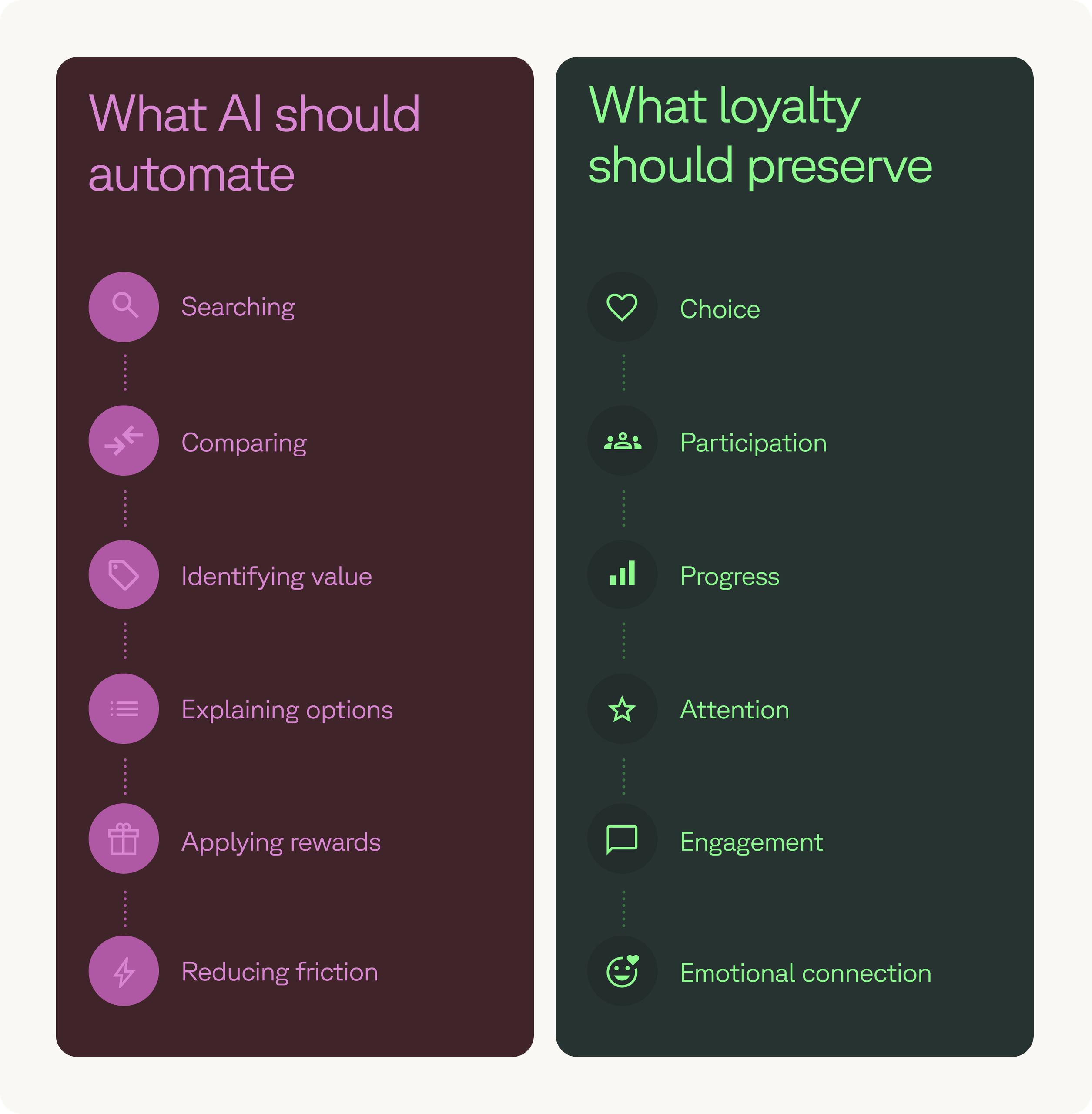
For grocers and other retailers, agentic commerce is unlikely to make the loyalty app disappear. The more immediate risk is a gradual loss of active participation. Retailers therefore need to decide which interactions agents should handle and which should continue to require the member’s direct involvement.
Build loyalty around existing behaviours
Let’s be clear again: not every app interaction needs to be protected from automation. Agents are great at discovery. But once discovery is optimised for agentic interfaces, programmes need to focus on activities that meet two criteria: people already value them, and agents cannot complete them on their behalf.
Some programmes are already setting the stage: IKEA Family members in Germany can earn points by attending workshops. Decathlon rewards members for logging their sporting activity.
An agent can make these benefits easier to discover, but it cannot complete the workout or take part in the workshop for the member.
Sainsbury’s Nectar shows what this can look like as an always-on feature of the loyalty app. Its Nectar Arcade lets members collect Nectar points by playing and reaching milestones in mobile games between shopping trips. After introducing this interactive, engaging, and always-available way to earn rewards, in-app activity of participating members increased 27% compared to pre-launch levels. 22% of gamers were members who returned to the Nectar coalition to earn points again after a year-long lapse.
When agents shop, members still play
The Nectar result in the era of AI shopping makes a timely case for mobile gaming in loyalty. This activity is deliberate enough to create active participation, yet accessible enough to happen repeatedly between shopping trips.
Mobile gaming is a direct route to the customer since this behaviour is already widely established. In 2025, 3 billion people worldwide play mobile games.
Getting customers onboard with Nectar Arcade didn’t require Sainsbury’s to manufacture a new consumer habit. It connected an existing entertainment behaviour to an existing reward system, creating another reason to engage with the programme between purchases.
What’s the mechanism?
Providing the infrastructure to connect members’ everyday digital activity with their loyalty balances is adjoe’s engagement tech. Members discover games inside programmes such as Nectar and earn loyalty currency for verified progress. Game studios fund the rewards and incremental programme revenue through their user-acquisition budgets, while the retailer owns the member experience and benefits from more frequent participation.
Game studios already spend over $25 billion a year to attract people who are likely to play their games. This has the potential to completely change the economics of loyalty for thin-margin retailers. It channels part of the acquisition budgets already competing to reach their customers into programme revenue and member rewards, reducing reliance on deeper price cuts and additional brand-funded points.
That’s agent-discoverable, human-completed earning
Agent-ready loyalty will eventually need to expose ways to earn alongside ways to redeem.
Consider a member who is 200 points short of their next reward. An authorised agent could identify the gap and surface several ways to close it:
- earn the points during the next shop;
- complete an eligible brand or partner challenge;
- attend an event or complete an activity;
- earn the remaining points through mobile gaming.
The agent performs the calculation and explains the options. The member decides how to participate.
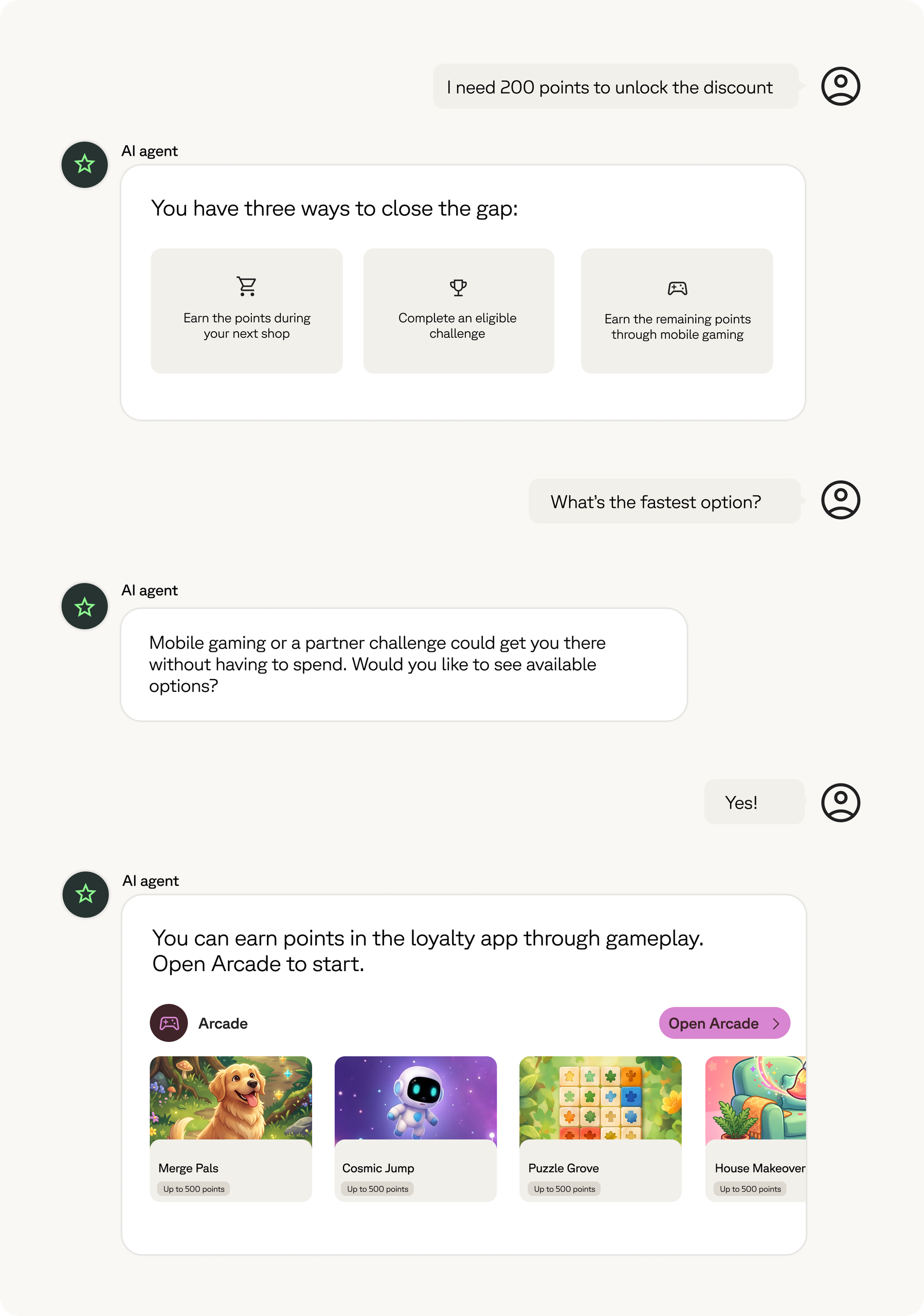
The agent can then direct the member to the relevant challenge, event or game, with the loyalty app taking over where participation begins.
Loyalty apps need a role that can’t be automated
Retailers preparing for agentic commerce have three jobs: make loyalty readable by authorised agents, let those agents remove friction from transactions and redemption, and preserve earning experiences that members actively choose and complete.
Agents can make loyalty value easier to discover and use. The app should remain where members actively create it. Otherwise, the programme risks becoming background infrastructure for someone else’s interface.