Growing guest counts is not getting easier for U.S. restaurants. Food and operating costs remain high, and guests are more selective about where they choose to spend. Value now shapes almost every decision, for restaurant brands and guests alike
More than 60% of U.S. restaurant operators saw traffic decline in 2025, and only 15% saw an increase, according to the National Restaurant Association’s 2026 State of the Industry report.
Meanwhile, costs make the profitability question more difficult. Total restaurant expenses rose 36% between 2019 and 2026. The financial squeeze puts QSR marketing and finance teams on the same mission: grow guest counts while making every dollar work harder, without trading away profitability
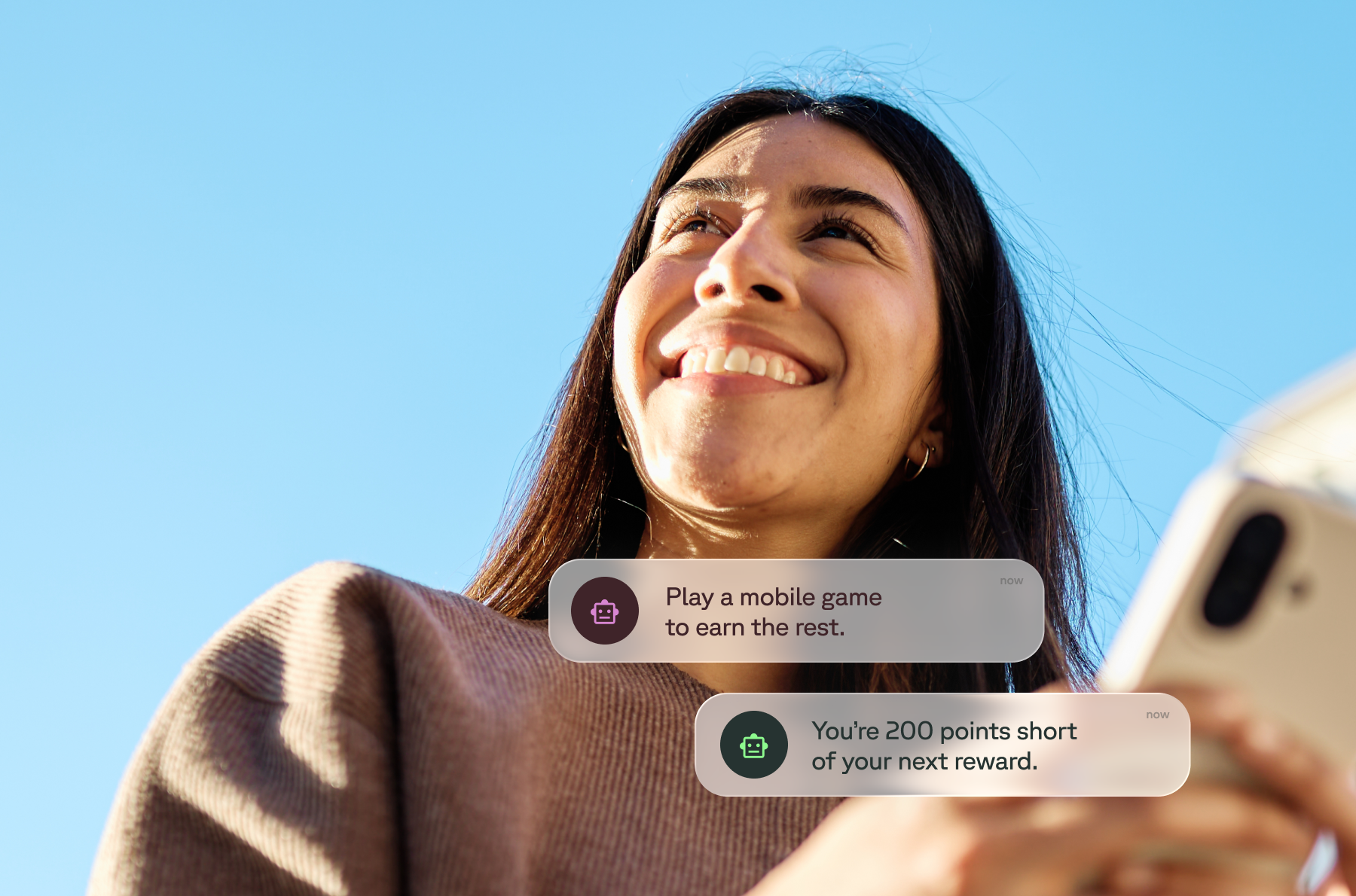
One solution gaining traction in other loyalty categories is rewarding customers for playing mobile games, giving guests more ways to earn rewards without increasing discounting costs for restaurants.
The loyalty program’s role in driving QSR traffic
Typical QSR marketing strategies fall into two groups. Long-term strategies like menu development, service improvements, new dayparts and brand investments. These are designed to build the brand and influence dining preferences over a longer time horizon.
Short-term strategies like LTOs, paid media, and delivery marketplaces, generate more immediate demand.
Both approaches to driving traffic are necessary, but neither guarantees that a guest who visits today will come back next month. Short-term campaigns will drive individual purchases, while experience improvements will take longer to translate into repeat business.
In between those strategies, there’s a risk of the guest falling off. After the first visit, fewer than half of new loyalty members return.. But after the fourth visit, the return rate goes over the tipping point and hits 95%.
Staying top of mind and delivering real value back to guests is precisely why loyalty programs have cemented their role in building on the demand these activities create. They allow restaurants to recognize returning members, understand purchase patterns and maintain a direct relationship beyond individual meal orders. Consumers have bought in, as 70% belong to a restaurant rewards program and say it matters when choosing where to eat.
What keeps loyalty members truly engaged?
Member offers and app-only deals became the default because they work fast and they’re easy to measure.
But deal seeking is now at its highest level in 50 years, with nearly 30% of restaurant visits tied to a deal. Deals also don’t hold guests on their own.
And while discounts can drive immediate purchases, they don’t necessarily keep guests coming back. With costs rising, brands need to find ways to drive steadier traffic without continually increasing promotion spend.
Once expanded to include challenges, streaks and tiers, the loyalty system is optimized for longer-term objectives. These recognize repeat purchases and give members achievable milestones to encourage continued participation.
As the system unfolds, there’s still a gap to fill. Most earning opportunities still depend on another qualifying order, which creates a very different experience for members who visit less often.
To fully support a diverse customer base and traffic pattern, the program needs to provide more ways to earn to offer greater value.
Where reward progress breaks down
When point-earning opportunities are tied to purchases, frequent members reach the next redemption threshold relatively quickly. But how many of them would have ordered again anyway?
Less frequent members take much longer to earn the same reward, if they reach it at all. When the required balance feels unattainable at their usual visit frequency, they have less incentive to keep participating in the program.
Merkle’s 2025 Loyalty Barometer found that 33% of consumers who abandoned a loyalty program in the previous year said rewards took too long to earn. And according to Antavo’s 2026 report, more than a quarter (26.2%) of U.S. consumers’ loyalty points go unspent.
Non-transactional earning, meaning ways to earn points without placing an order, can accelerate engagement. By allowing less frequent members to progress toward rewards without making another purchase, brands can create more opportunities to redeem and more reasons to come back. That leaves QSR loyalty teams with a clear question: how can less frequent members make meaningful progress without requiring another restaurant visit or another bonus-point promotion?
One way to do this without increasing the promotional budget is partner-funded rewarded gaming. QSR brands can build loyalty without deals or purchases by rewarding members for playing mobile games, with the rewards funded by participating game studios rather than the restaurant brand.
Why mobile gaming?
It’s a digital activity with some of the widest reach across the country: 212.3 million Americans – or approximately two thirds of the country – play video games every week, and mobile is the most-played platform.
Once games are integrated into the loyalty program, members discover them through the QSR’s app, play them and earn the brand’s own loyalty points for reaching game milestones. Those points add to their existing balance and bring them closer to the rewards they already know, without requiring another restaurant visit or bonus-point promotion.
A promotion can stimulate a purchase, while engagement that continues between promotions and purchases can strengthen the member relationship over time.
Gaming rewards in loyalty: The proof of concept
With adjoe’s app engagement technology, QSR brands can integrate mobile gaming into their existing loyalty programs through an SDK, turning everyday play into regular opportunities to earn rewards and engage with the brand.
In retail, it’s already driven meaningful impact. A leading UK retail loyalty program with 24M members has seen:
- Participating members increased their in-app activity by 27% compared with pre-launch levels.
- 25% of gaming points issued were redeemed within 19 days, faster than the program's average redemption.
- 22% of participating members were reactivated after at least a year of inactivity.
Together, these results show what a second way to earn can do: more engagement, faster redemption and reactivated members.
For QSR loyalty programs, the same approach offers a way to engage less frequent guests, accelerate reward progress and support repeat visits without continually expanding promotional spend. Funded by participating game studios, it also creates an additional revenue stream for the loyalty program.
Loyalty not tied to the next promotion
Limited-time offers and targeted loyalty rewards will continue to support short-term traffic goals, and permanent value menus and bundles provide affordable everyday options for guests.
But there remain opportunities to make loyalty programs more meaningful and keep members active between promotions. Rewarded gaming already demonstrates how brands can extend engagement beyond purchases, helping members progress toward rewards without relying on another restaurant-funded promotion. For QSR brands, it’s a practical way to pursue deeper loyalty without deeper discounts.
See how adjoe can bring partner-funded earning to your loyalty program.